We compared manufacturer specs, manuals and warranty terms. We have not hands-on tested these products yet. How we research
We may earn a commission when you buy through links on this page. As an Amazon Associate I earn from qualifying purchases. How we make money
A rowing machine works your legs, back and arms in one smooth stroke, and many stand upright or fold, which helps in a small room. The decisions that matter are the type of resistance, the length of the rail for your height, how it stores and how loud it is. This page is for adults choosing a full-body cardio machine for home.
We compared 7 rowing machines and picked 7.
Our picks at a glance
1
Best overallConcept2 RowErgThe rower used in gyms and indoor races, with the PM5 monitor and a frame that splits in two.
$990.00Price as of Nov 25, 2026, 2:23 AM ET. Details
Best incline designYPOO RM930 Magnetic Rowing MachineA magnetic rower with a 46-inch dual slide rail set at a slight uphill angle, for users up to 350 lb who want a quiet, foldable machine.
$151.99Price as of Nov 25, 2026, 7:12 PM ET. Details
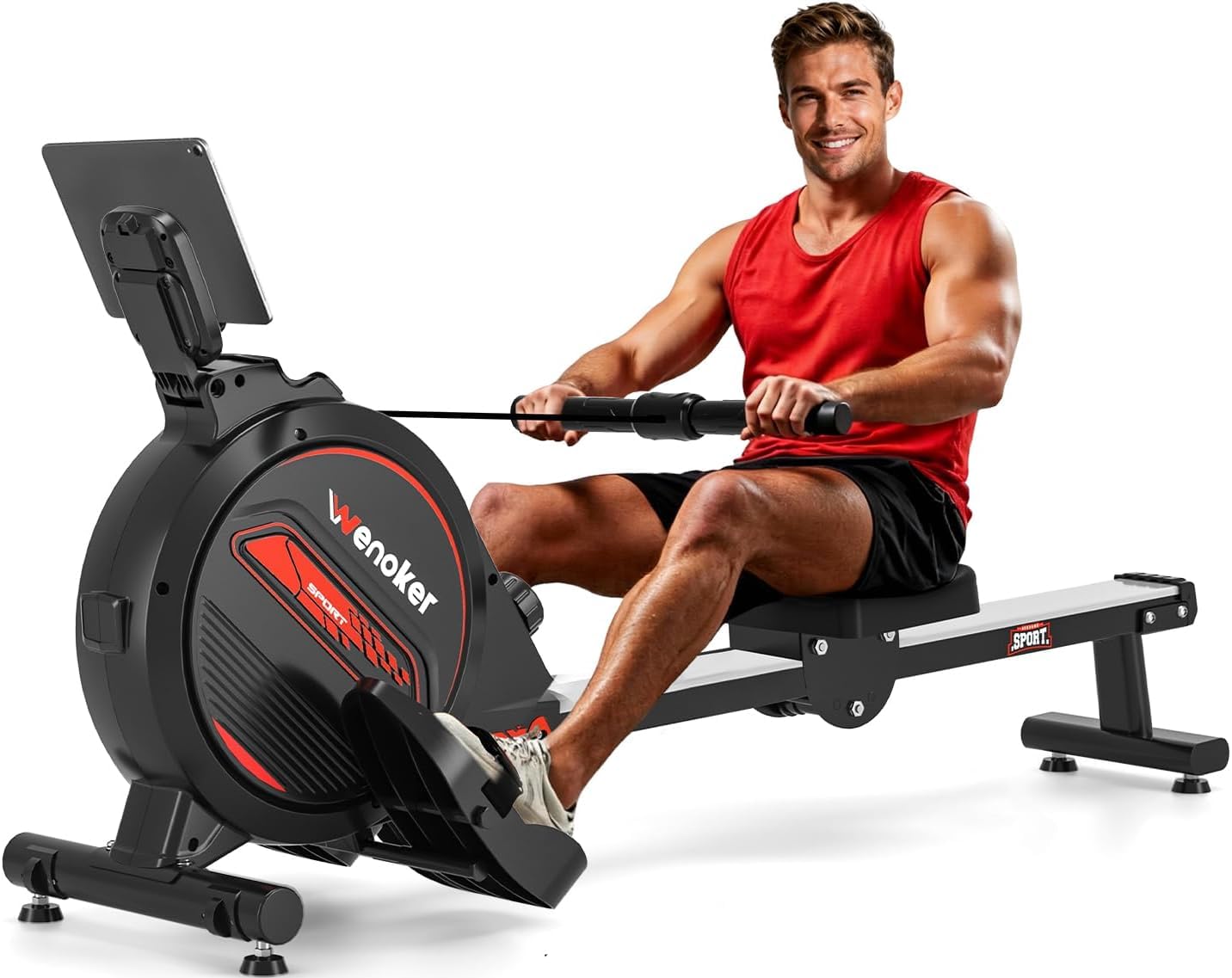
Best vertical storageWenoker Magnetic Rowing MachineA magnetic rower for small apartments that stands upright on about 3.1 sq ft of floor when you are done, with 16 resistance levels.
$158.09Price as of Nov 25, 2026, 7:13 PM ET. Details
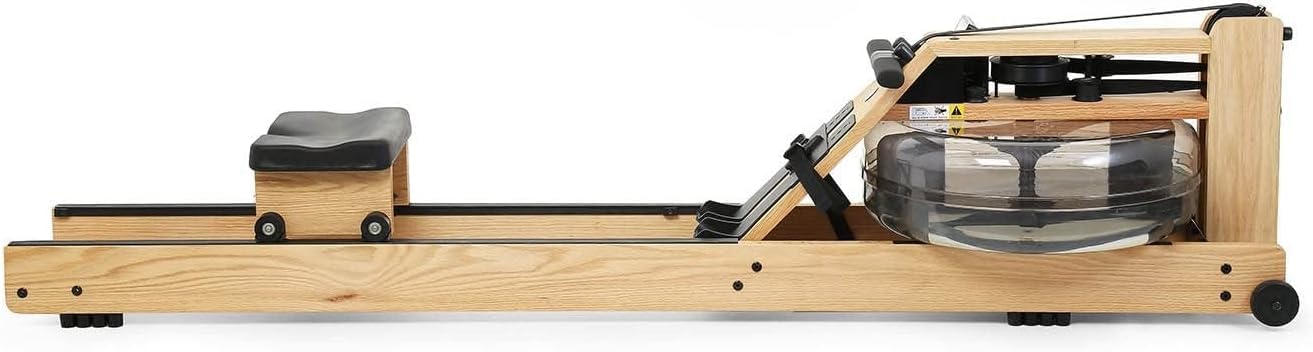
Air, magnetic and water designs differ in how they create resistance. Concept2 notes that on an air rower the resistance comes from you, not from a higher damper number (Concept2). Water rowers use paddles in a tank. Check the resistance type in the table and think about noise in your room. Our guide to how to use a rowing machine explains how damper settings work on air models. The table lists the resistance type and the number of levels or damper range, so compare both columns before you decide.
Monitor and metrics
Compare what the monitor displays and whether it connects to an app. Basic monitors are enough to track time and pace. If you want the drag factor, check that the monitor shows it, since that is how you compare machines. A monitor that shows pace and time is enough to follow the first-week plan in our rowing guide. Check the monitor column in the table for what each model displays.
Footprint and storage
Look at the length in the table and at how the rower stores: some stand upright on their end, and some fold. A rower that stands upright takes little floor but needs a clear spot. Measure the space it will use when you row and when it is stored. Compare the storage column across pages, since upright and folding designs free up different amounts of floor.
Rail length for tall users
Compare the maximum inseam in the table with your own. If the listing does not give an inseam, look at the rail length. A rail that is too short makes the finish cramped. A longer rail makes the machine longer to store.
Noise
Noise claims in listings are maker-stated and hard to compare. Check the resistance type in the table, read the listing, and think about the floor beneath it.
Max user weight
Compare the maximum user weight with the heaviest person who will use the machine. Also check the seat height and the foot straps for fit. A machine that suits one household member may not suit another. Compare the maximum inseam as well, so the rail length suits the tallest rower in the home.
Check the monitor for drag factor if you want to compare settings between machines.
Place a mat or flooring under the rower to protect the floor and cut noise.
Check the maximum inseam and the rail length together if you are tall, and read the manual's storage instructions before you decide where the rower will stand.
FAQ
What damper setting should I use?
Concept2 suggests starting between 3 and 5. A higher number is not automatically harder or faster, because the effort comes from you (Concept2).
Push with the legs and back, finish with the legs straight and a slight lean back, then extend the arms and swing forward at the hips to recover (Texas DPS training guide).
Does rowing count toward the guidelines?
Yes, it counts as aerobic activity toward the CDC's 150 minutes of moderate or 75 minutes of vigorous activity a week (CDC).